
Timber Appraisal Web App
Modernized web app improving the timber appraisal process for 10 legacy systems.
Certain project details and internal workflows are withheld due to NDA restrictions. Please contact me to learn more.
Project Overview
Dec 2023 - Sep 2025
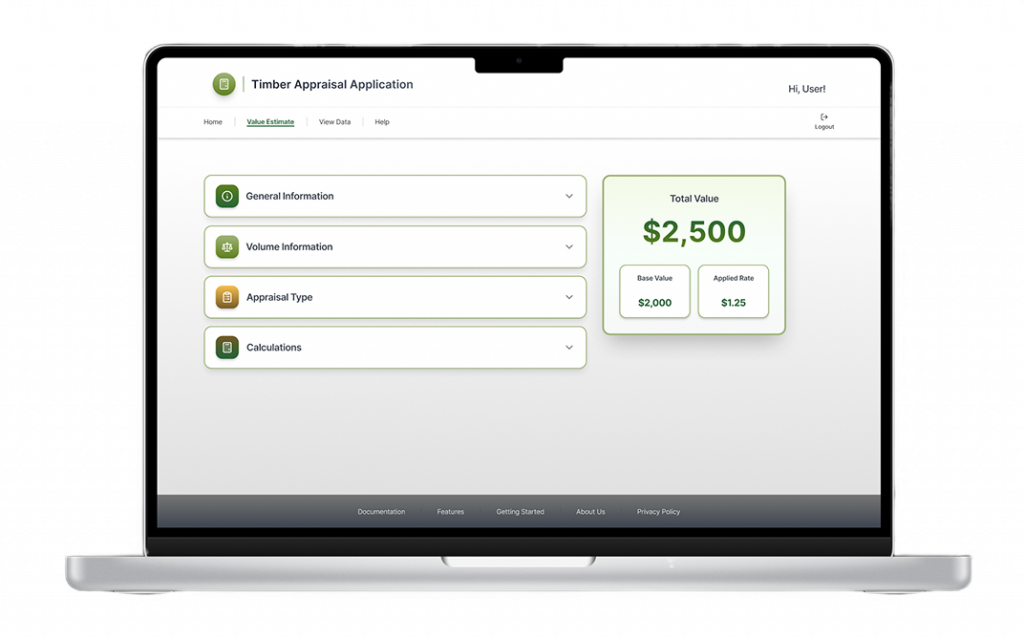
This project involved leading the modernization of an appraisal platform that supported complex, cross-functional workflows across 10 systems. The existing ecosystems relied on manual reports, resulting in inefficiencies, and limited long-term viability. The objective was to define an intuitive, accessible solution that improves operational efficiency, and supports future scalability.
Problem
How might we unify a fragmented, spreadsheet-driven appraisal process into a single platform that simplifies complex calculations, supports regional variability, and provides an accessible, modern experience for appraisers?
Role
Lead UX Designer/Researcher
Responsibilities
- Led UX design for the appraisal workflow redesign
- Conducted user interviews and research
- Designed end-to-end digital appraisal experience
- Structured complex calculation inputs into guided workflows
Client
Government Agency (Name withheld)
Process Overview
click to enlarge
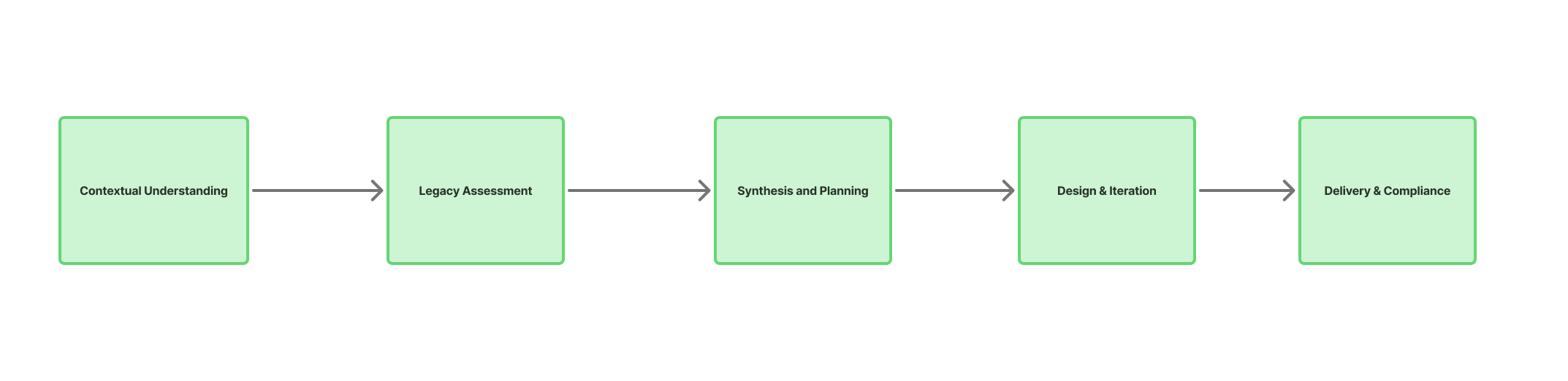
1) Contextual Understanding
The project began with no existing shared baseline, requiring intentional onboarding into a highly specialized area. I partnered closely with subject matter experts to understand industry terminology, appraisal concepts, and regional considerations before proposing any design direction.
2) Legacy Assessment
To inform modernization efforts, I conducted interviews with legacy application users who served as subject matter experts across regions. These conversations focused on understanding existing workflows, system limitations, and areas of operational friction. Findings were supplemented by reviewing historical documentation to identify patterns and constraints without replicating legacy behaviors.
3) Synthesis and Planning
I analyzed research findings into clear design priorities, shared principles, and a phased delivery approach. I established a 3-week sprint cadence to balance discovery, design, and implementation while maintaining ongoing stakeholder alignment.
4) Design & Iteration
I designed and refined solutions through iterative prototyping and validation, incorporating continuous feedback from stakeholders throughout sprint reviews. This approach ensured designs were grounded in detail-oriented workflows and were technically feasible.
5) Delivery & Compliance
I collaborated with engineering to deliver features in 3 week sprint increments, supporting parallel implementation and validation. Accessibility considerations were integrated throughout design and development rather than treated as a final step.
Appraisal Estimate Workflow
Appraisers needed to determine the value of an asset using several different calculation models. Each model required its own set of inputs and data sources. Automating the appraisals made the complex process much quicker and streamlined.
The Challenge
Legacy Applications
Appraisers had to manually enter calculations across legacy applications, which lengthened the appraisal process and increased the likelihood of user errors.
Manual Workflows
Manual workflows made the appraisal process more complex and time consuming.
Calculation Models
Manual calculations often led to small calculation errors and required multiple approvals to verify that the math was correct.
Required inputs
130 inputs were required to complete an accurate appraisal. The previous process was time consuming, difficult for new appraisers to learn, and required extensive training to complete correctly.
Existing workflow

click to enlarge
Solution
Application
- Consolidates the fragmented workflow into one platform
- Uploads required files or enters key values directly while the calculations are made in the backend
- Centralizes the appraisal process into a single platform, eliminating inconsistencies across the 10 legacy applications
Improved workflow

click to enlarge
Impact
This project transformed a fragmented, spreadsheet-driven appraisal process into a unified digital workflow that modernized how appraisals are completed.
Key outcomes
Consolidated 10 legacy applications into a single platform that centralized data and inputs for every appraiser
Streamlined a previously complex 30-step workflow into a guided digital process
Structured 130+ required inputs into organized, user-friendly input groups.
Automated calculations across multiple evaluation models previously performed manually reduced risk of user error and significantly reduced time required to complete appraisals
Implemented Section 508 and ADA accessibility standards across the interface